
AI can speed up financial processes and reduce repetitive work, but it does not always lower costs. Drawing on examples from Kcell, Freedom Life and EA Group Holding, we explore how to assess the impact of AI implementation, address data quality challenges and determine which decisions should remain under human control.
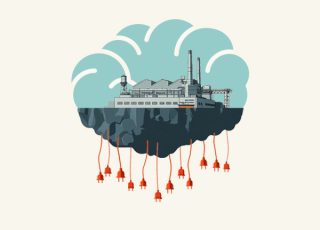
A factory can install robots, deploy MES and collect real-time data without becoming genuinely smart. Gulshan Kumar of Samsung Electronics India explains where Smart Factory programmes tend to stall and what manufacturers need to move from isolated automation to an integrated production system.

Fraud is becoming more sophisticated, while traditional rules and fragmented systems are struggling to keep pace. AI can improve detection by identifying anomalies earlier, reducing false positives and uncovering connections between accounts, devices and people involved in fraud. But its success depends on three foundations: high-quality data, explainable models and effective information sharing & collaboration between institutions.

Fraud prevention in digital banking can no longer begin with the payment itself. Warning signs often appear earlier, during onboarding, login, a device change or an account recovery attempt. The UniCredit NV/SA case shows how connecting AML, device intelligence and transaction monitoring can help a bank detect the sequence before money leaves the account.

AI has not created fundamentally new forms of fraud, but it has transformed the economics of attacks. Schemes that once required large teams and substantial resources can now be automated and scaled at speed. Businesses must therefore rethink how they detect risk, respond to attacks and contain incidents before they spread.

Fraud in fintech is no longer just a security concern. It shapes growth, trust and regulatory scrutiny. This article explores the trade-offs between convenience and control, what works in practice, and how risk strategy evolves as companies mature.

Artificial intelligence can produce dozens of possible solutions in minutes, but speed says little about their quality or practical value. This article examines how TRIZ can bring structure to AI-assisted problem-solving, help companies find technologies beyond their own industry, protect sensitive information and recognise when a system has reached the limits of optimisation.