






How Banks Manage Liquidity When the Rules Change Every Week

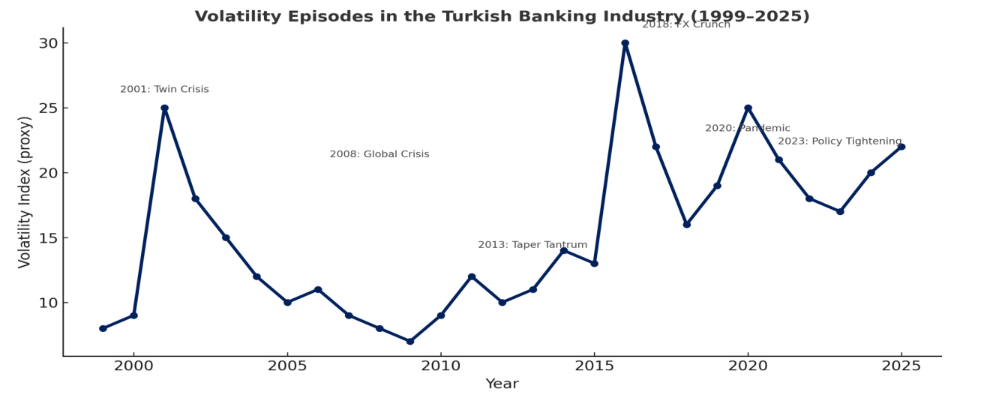
Volatility can no longer be treated as a one-off shock. Since 2018, the financial system has effectively operated in a state of continuous instability. That reality is reshaping both liquidity management and the way decisions are made.
At the Bank Treasury Forum – Eurasia, Selcan Özen (FRM), Head of ALM within Market Risk at Yapı Kredi Bank, shared her experience of building resilience on what often feels like a financial roller coaster, with one crisis quickly giving way to the next.
Yapı Kredi Bank built liquidity flexibility before the crisis through discipline, clear procedures, risk frameworks and a culture of operating as one system. This article examines how that flexibility was developed, which practices matter most under stress and what must change when the external environment moves faster than traditional governance cycles.
Why Resilience Did Not Emerge Naturally
In 2001, Turkey experienced a crisis often described as a “twin deficit crisis.” The consequences were severe: unemployment surged, many banks collapsed, and others were nationalized.
At the time, it may have seemed that the worst was over. The years that followed proved otherwise.
The relative resilience of Turkey’s financial sector during later periods of turbulence was not accidental. After the 2001 crisis, a series of structural reforms reshaped the banking system:
- the creation of independent regulation through the Banking Regulation and Supervision Agency (BRSA) and the deposit insurance system SDIF,
- recapitalization and restructuring of both state-owned and private banks,
- the implementation of Basel II and Basel III standards and modern risk-management frameworks,
- the entry of international strategic investors, bringing new governance and management practices.
Fiscal and monetary discipline also played an important role, although political considerations occasionally interrupted it.
Today these reforms have resulted in stronger capital buffers, more resilient liquidity positions, a culture of stress testing and scenario-based management, relatively low levels of non-performing loans, disciplined restructuring practices, and policy coordination between the Central Bank, BRSA and the Treasury.
But for the purposes of liquidity management, the most important outcome was not the metrics themselves. It was the way successive crises reshaped how institutions organize internally to manage liquidity.
Flexibility Means Prepared Coordination
Looking across the crises of 2001 and 2008, the currency shock of 2018, the pandemic and the post-pandemic period, liquidity management has clearly evolved from reactive defense to proactive flexibility.
Over time, the performance of individual functions became less important than the quality of the way they worked together.
Liquidity flexibility now operates across two dimensions:
Inside the bank, where treasury, risk management, finance and compliance operate as a single coordinated mechanism.
At the sector level, where banks, the Treasury and the central bank synchronize their actions, and competition temporarily gives way to coordination during periods of stress.
In practice, that distinction matters because the speed of a response depends on coordination at both levels.
2018: A Currency Crisis as a Test of Liquidity and Coordination
The most severe spike in instability occurred in 2018. A sharp currency depreciation put pressure on funding sources and became a real stress test for the banking system.
Traditional static ratios were no longer enough. Liquidity management had to move from procedural resilience to situational adaptability.
Several practical steps were taken:
- accelerating ALM strategies to preserve balance sheet stability,
- strengthening centralized risk oversight to enable faster responses,
- shifting liquidity management into a regime of daily stress testing,
- enabling near-real-time data exchange and flexible funding mixes.
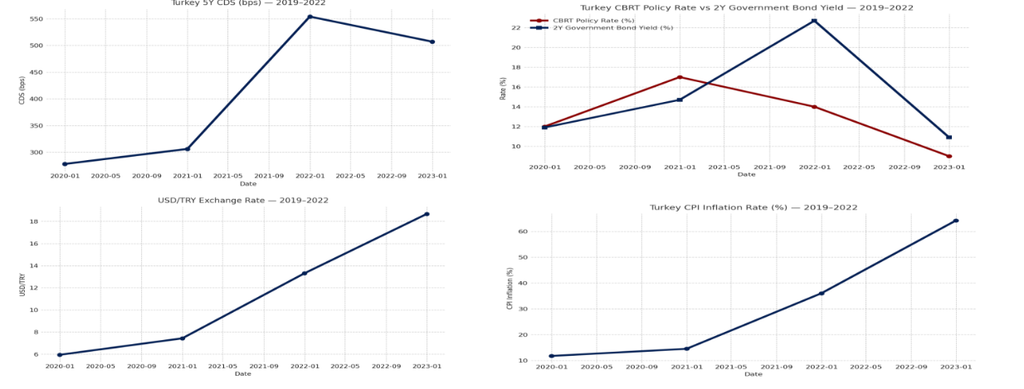
Market indicators from that period illustrate the volatility. After the Central Bank of Turkey raised interest rates by 625 basis points on September 13, markets recovered significantly from the peaks seen in August. Five-year CDS spreads declined to around 441 bps, down from levels above 500, and later moved toward 360 bps.
One lesson was clear: even strong liquidity metrics cannot replace the ability to assemble quickly and make coordinated decisions.
Importantly, one of the critical turning points occurred long before the crisis itself.
As part of a European banking group, the bank operated within a comprehensive set of internal policies and procedures. Dedicated liquidity working groups had developed clear crisis playbooks years earlier: what action to take, when to escalate, who to call, who needed to join the decision process and which responses applied at each stage of a crisis and at different liquidity coverage ratio levels.
These procedures had been prepared six to seven years before the events of 2018.
In calmer times, the preparation could feel like unnecessary bureaucracy. When the crisis came, it worked.
The bank organized rapidly and acted as one team. The experience reinforced a central principle: speed in a crisis comes from roles, triggers and escalation rules agreed in advance.
The Pandemic: Daily Liquidity Management and Compliance Joining the Decision Loop
The pandemic in 2020 became a global crisis. Central banks injected liquidity into economies, regulators introduced relief measures, and uncertainty rose sharply.
Institutions had to learn to respond to shocks almost overnight.
Yapı Kredi Bank entered the pandemic carrying the lessons of 2018, but by then it had also developed institutional muscle memory. Treasury and risk worked in lockstep, while compliance became part of the operational decision loop.
Several practices became standard:
- daily coordination and recalibration of liquidity decisions,
- growing importance of intraday liquidity management and flexible liquidity models,
- the implementation of early-warning systems, where signals became actionable indicators.
Another defining factor was the speed of regulatory change.
At one point, the bank was tracking more than 450 microprudential measures, with updates arriving frequently, including on weekends. Teams had to meet quickly, assess the implications for liquidity coverage ratios and adjust their actions almost immediately.
The experience reinforced the importance of flexibility and cross-functional coordination.
The Post-Pandemic Phase: Increasing System Mobility
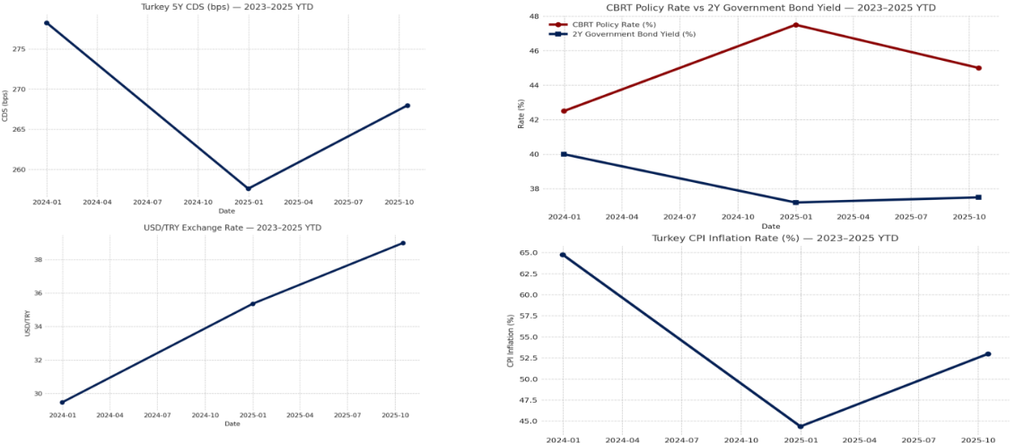
After the acute phase of the crisis, attention shifted toward normalization and rebalancing.
There was renewed focus on structural liquidity ratios and forecasting tools for stress scenarios.
Within the bank, the shift was described in practical terms:
- the focus moves from liquidity levels to liquidity mobility,
- quality increasingly matters more than quantity,
- dashboards, automation and remote decision tools gain importance,
- flexibility shifts from reaction toward anticipation.
During prolonged turbulence, simply accumulating liquidity buffers is no longer a universal solution. The critical capability is to make decisions faster than usual without losing control.
Aligning Treasury, Risk, Finance and Compliance
Over time, the bank moved from separate functional silos to a single operating system.
In practice, this means shared data, aligned KPIs, shared accountability and a guiding principle: speed with alignment.
The internal operating model includes:
- weekly adaptive meetings where limits evolve alongside market conditions,
- treasury managing the cash position in real time,
- risk teams recalibrating scenarios daily,
- compliance translating regulatory changes rapidly into operational guidance,
- finance dynamically aligning funding costs and strategic balance-sheet decisions.
The result is coordinated autonomy. Decisions can be made quickly, but within a common framework.
Culture is equally important. Flexibility cannot be delivered as a short-term project. It is built through years of discipline until coordinated action becomes an institutional habit rather than a response activated only in a crisis.
Sector-Level Flexibility: When Resilience Becomes Scalable
There is a level at which flexibility ceases to be a property of a single institution.
The experience showed how banks, the Treasury and the central bank can coordinate their actions. During periods of stress, competition temporarily gives way to synchronization, while real-time liquidity monitoring strengthens the resilience of the system as a whole.
Collective actions helped prevent liquidity spirals.
This leads to an important conclusion: systemic resilience depends not only on how well an individual bank is structured, but also on how quickly the sector can synchronize responses when both rules and markets change simultaneously.
Practical Lessons and Operating Principles
Preparedness is not about plans. It is about mechanisms.
Playbooks, working groups, triggers and escalation rules create speed when there is no time left to debate the process.
Alignment matters more than the efficiency of individual teams.
When treasury, risk, finance and compliance work together, decisions can be made faster within a shared framework.
Data and routine are the foundation of flexibility.
Daily scenario recalibration, frequent dialogue and dashboards make the response more controlled.
Compliance is part of speed.
When regulation changes frequently, the ability to interpret new rules and turn them into action quickly becomes critical.
Liquidity management evolves after every crisis.
The focus shifts from volume to mobility and from reaction to anticipation, supported by stronger forecasting tools and structural metrics.
Ultimately, flexibility is not the opposite of control. It is a more mature form of control, one that allows organizations to act quickly while remaining aligned.
Editorial Note
This article was prepared by the B2B Events editorial team based on a presentation delivered at Bank Treasury Forum – Eurasia 2025. The analysis, conclusions and recommendations reflect the editorial team’s interpretation of the material presented.
Artificial intelligence tools were used to analyse the presentation materials, structure the information and assist in preparing the article. The final text underwent editorial review. The B2B Events editorial team assumes responsibility for the content and publication of this article.

CLTV in Banking: Linking Customer Behaviour to Profitability
A P&L statement shows what a bank has already earned. CLTV looks ahead: which customers are likely to create value in the future, and what behaviour will drive it? Bereke Bank’s experience shows why banks need to move beyond the idea of an “average customer”, how they can work with incomplete data and where CLTV can sharpen decisions on acquisition, retention and customer development.
The True Cost of Funding: Funds Transfer Pricing in Banking: Managing Funding Costs and Product Profitability
When Treasury and business units use different assumptions about the cost of funds, product profitability becomes difficult to measure and accountability less clear. Eskhata Bank's redesigned Funds Transfer Pricing framework provides a consistent approach to internal funding costs, risk allocation and liquidity management, offering practical lessons for banks operating in markets with limited financial data.