





Geopolitical Risks: What Treasury Teams Need to Review in Funding and Liquidity

Consider a stress scenario in which oil prices rise, the US dollar strengthens and credit spreads widen. Analysing each development separately could mean overlooking their combined effect on cash flow. Yet a single geopolitical shock can trigger all three.
Companies can reduce their exposure by diversifying funding sources, hedging foreign exchange risks and holding larger liquidity buffers. Each measure, however, comes at a cost. The challenge for finance teams is to determine which risks justify that expenditure and how much resilience the business genuinely needs.
Marcelo Carvalho, a Global Macroeconomics Specialist, Senior Research Associate at ODI Global and former Head of Global Economics at BNP Paribas, places this challenge in the context of changing rules governing international trade and capital flows. The assessments and forecasts discussed in this article reflect the outlook as of October 2026.
Resilience Is Changing How Companies Think About Efficiency
The way companies design their supply chains is changing. Choosing the lowest-cost supplier and keeping inventories to a minimum made commercial sense in an environment of relatively open international trade. Today, tariffs, export restrictions and strategic competition are forcing businesses to reconsider those decisions.
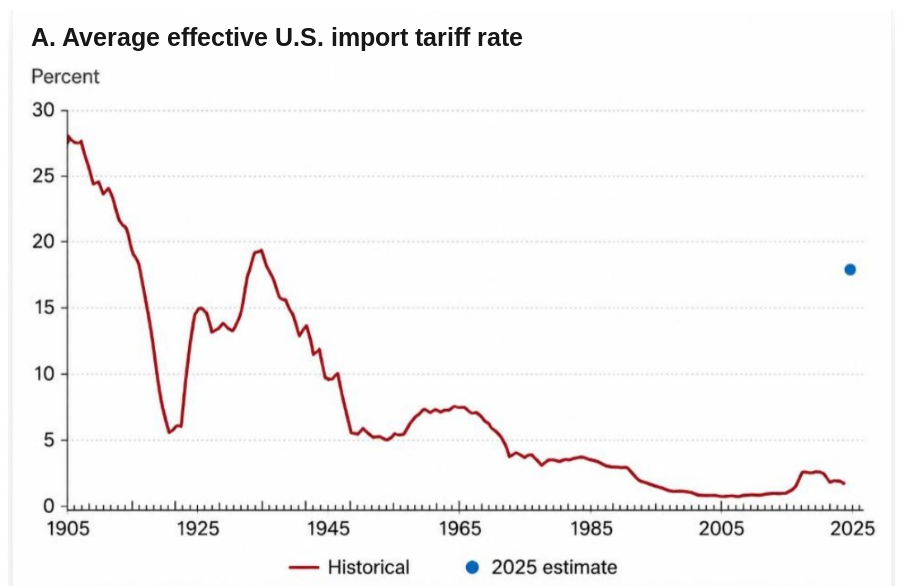
Reshoring production, moving operations to politically aligned countries and maintaining safety stocks can reduce certain risks, but they also increase costs. The shift from just-in-time to just-in-case supply chains therefore raises an important question for finance teams: how much is that additional protection worth?
Answering it requires an assessment of liquidity needs under stress, supplier dependencies and concentrations of cash and other financial resources. The duration of a potential disruption also matters. A company needs to understand whether it could withstand a prolonged deterioration in operating or financial conditions, rather than simply absorb a short-term shock.
This does not mean that all international economic relationships are weakening. Fragmentation is uneven: some trade and financial connections are becoming more restricted, while others are strengthening. For treasury planning, what matters is the company’s actual exposure through its trading relationships, counterparties and sources of capital.
Why Higher Funding Costs Could Persist
Even when supply chains continue to operate as planned, geopolitical developments can affect the interest rates at which companies borrow or refinance existing debt. Two main transmission channels are particularly relevant.
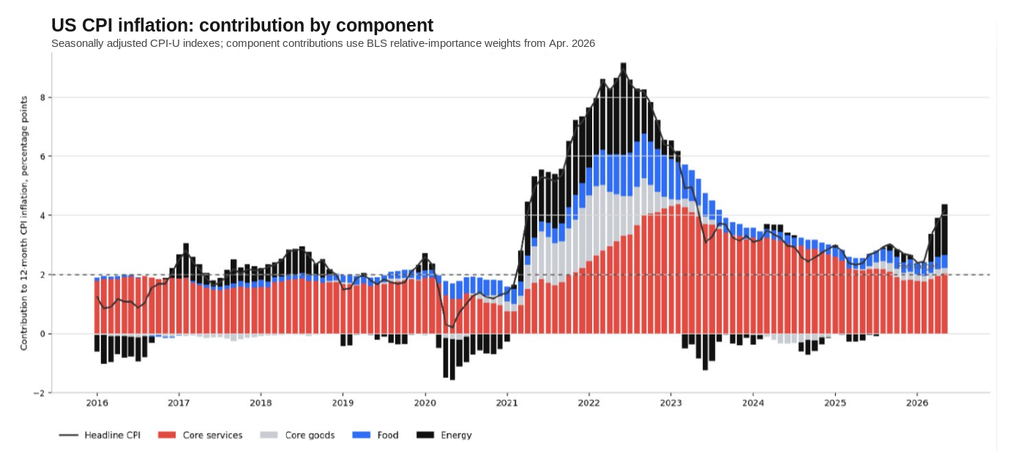
The first is the monetary policy channel, which begins with energy markets. Supply disruptions and higher energy prices increase transport and production costs, feeding through to inflation and inflation expectations. This makes it harder for central banks to reduce interest rates and, if inflationary pressures intensify, may require tighter monetary policy.
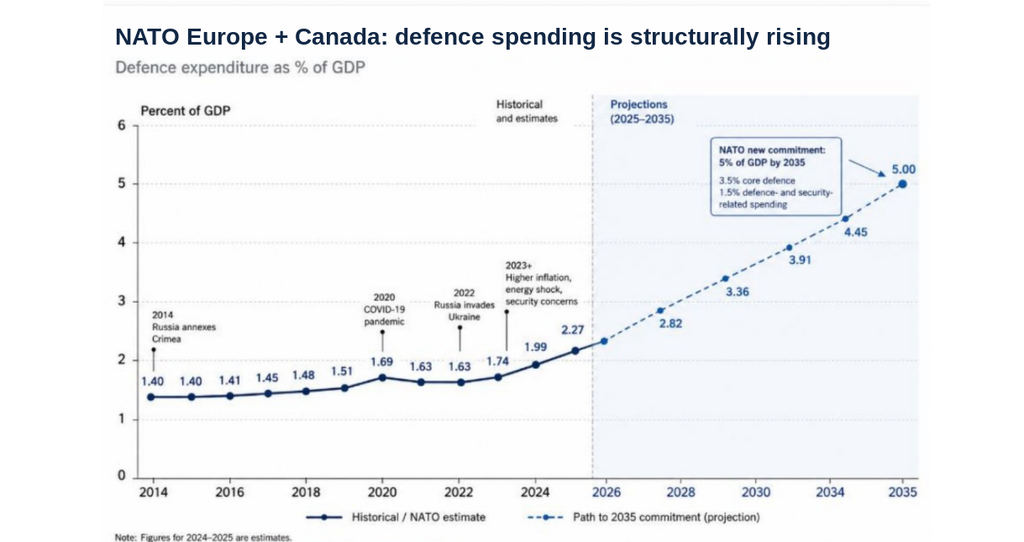
The second is the fiscal channel, driven by growing government spending requirements. Defence expenditure, ageing populations and climate change are increasing the demands on public finances. Pensions and healthcare, climate adaptation and the costs of responding to natural disasters all add to budgetary pressures. Greater government borrowing requirements may, in turn, contribute to higher yields on long-term sovereign bonds.
For treasury teams, the implication is that a prolonged period of elevated interest rates needs to be considered as a credible scenario. It could increase debt-servicing costs on floating-rate borrowings and make refinancing more expensive.
Expectations of stronger economic growth and easing inflation in 2027 remain uncertain, with much depending on geopolitical developments and energy prices. Building funding assumptions solely around an anticipated improvement in these conditions would therefore be risky.
Treasury teams also need to assess the conditions in each market where the company raises finance. The same increase in oil prices can have very different implications for inflation and borrowing costs across countries.
Emerging Markets Will Not Respond in the Same Way
Higher oil prices can benefit energy exporters by improving their terms of trade, increasing government revenues and strengthening current account balances. For energy importers, however, rising costs can fuel inflation and put pressure on the current account.
Türkiye illustrates the importance of this distinction. Its dependence on imported energy makes energy costs and their implications for the exchange rate particularly significant. At the same time, domestic conditions remain important, including the pace of disinflation and confidence in economic policy. An external shock does not remove the influence of these factors.
In the Caucasus and Central Asia, opportunities for growth coexist with exposure to commodity price volatility and trade disruptions. The development of Middle Corridor logistics, diversification of energy sources, critical minerals and regional integration could create investment opportunities, including in infrastructure.
Access to capital, however, also depends on global financial conditions. A stronger US dollar and wider credit spreads — the additional yield investors demand over benchmark assets to compensate for credit risk — can quickly make financing more difficult for emerging-market borrowers.
Companies with high debt burdens, short repayment maturities, currency mismatches and limited hedging options are particularly vulnerable. The key question is therefore how changes in market conditions would affect the cash flow and debt-servicing capacity of an individual business.
Where Financial Vulnerabilities May Emerge
Diversifying funding sources and spreading debt maturities can reduce a company’s dependence on raising large amounts of finance at a single point in time. However, treasury teams also need to consider which funding options would remain available if market conditions deteriorated.
Liquidity presents a separate challenge. More fragmented capital markets can make cross-border movements of funds less predictable. Companies need to understand which currencies they can transfer, where those funds can be moved and what alternative sources of liquidity would remain accessible during periods of stress.
Commodity exposure requires attention to more than prices. The physical availability of essential inputs and the time required to obtain them can be just as important. Even an accurate price forecast cannot establish whether a company will receive the quantities it needs when they are required.
These exposures ultimately feed through to the balance sheet. Hedging costs and the need for additional liquidity buffers may rise at the same time, while protecting against every possible adverse development would be prohibitively expensive. The priority is to identify risks that could threaten the company’s ability to meet its obligations or materially restrict its strategic flexibility.
Scenario Analysis: Testing Interconnected Shocks
A practical stress test can combine three developments: higher oil prices, a stronger US dollar and wider credit spreads. Rather than assessing each variable in isolation, the objective is to understand how they would affect the company together.
The following questions have been grouped by the B2B Events editorial team to illustrate this approach.
| Area to Review | Key Question for Treasury |
| Cash flow | How would the combined changes affect margins and the company’s ability to service its debt? |
| Refinancing | Which debt maturities fall within the stress period, and how dependent is the company on new borrowing? |
| Access to liquidity | Could the company move funds to where they are needed, in the required currency? Which backup funding sources would remain available? |
| Supply chains | What would happen if higher prices were accompanied by longer delivery times or reduced availability of essential inputs? |
| Cost of protection | Which risks warrant hedging or additional liquidity reserves, and what level of protection is justified by the cost? |
The test is whether the company can continue meeting its obligations without being forced to sell assets or arrange emergency borrowing. This type of analysis helps identify precisely where the business depends on favourable external conditions.
No treasury team can predict the next geopolitical development with certainty. But if a company’s ability to repay debt depends on low interest rates, an affordable US dollar and uninterrupted supplies, how well prepared is it for a different outcome?
Editorial Note
This article was prepared by the B2B Events editorial team following a presentation by Marcelo Carvalho at the Global Treasury Forum, held in Antalya on 15–16 October 2026. The analysis and conclusions do not necessarily reflect the views of event participants or the organisations they represent.
AI tools were used to assist with analysing the source materials, structuring the information and preparing the article. The final text underwent editorial review, and the B2B Events editorial team takes responsibility for its content and publication.

Cost of Funding: Why a Low Interest Rate Is Not Enough
Keeping Projects on Track as Funding Costs Rise When borrowing becomes more expensive and a company cannot pass the additional costs on to customers, declining margins can threaten projects that are already under way. Finance teams need to reconsider not only the cost of raising funds but also the combination of funding sources they use. […]