







The Investment Market After the Era of Cheap Money: Who Is Ready for the New Financial Landscape?
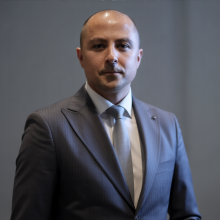
Ali Alaskarov
Xalq Bank (Azerbaijan)
Head of Financial Markets Operations Division, Treasury Department
How are markets evolving after the end of the cheap-money era, and what roles will digital currencies, technology and ESG financing play? Ali Alaskarov, Head of Market Operations at Xalq Bank, discusses how global trends, Azerbaijan’s macroeconomic stability and technological innovations together define the competitiveness of financial systems across the region.
Global Trends: The New Price of Capital
For fifteen years, the world lived under the illusion that money could be free. Central banks flooded markets with liquidity, interest rates hovered near zero, and investors chased yield in increasingly unconventional places.
That era is definitively over.
Yes, regulators began cautiously easing policy in late 2024, but structurally nothing has changed. Capital remains expensive, liquidity — selective, and risk — intentional. Today, success no longer depends on access to capital but on the ability to understand precisely what you are paying for and what risks you are taking on.
After the euphoria of zero rates, investment decisions require maturity: calculation, analysis and discipline. Those accustomed to effortless yield are losing their orientation. Those who understand risk and see the structure of flows, will gain a meaningful advantage.
Paradoxically, expensive money makes markets more fair.
Central Banks and Geopolitics: Who Sets the Rules Now
The financial map of the world is no longer drawn on Wall Street or in the City of London. It is being redrawn in central-bank headquarters and geopolitical decision-making centers.
A subtle shift in tone from the U.S. Federal Reserve can trigger massive capital flows from Asia to the U.S. within hours. A signal of policy easing from the European Central Bank instantly moves currencies.
Markets are no longer driven solely by supply and demand — regulatory decisions can change the rules mid-session.
Geopolitics has also moved from background context to a first-order force. Energy alliances, de-dollarization, currency alternatives and new payment systems are shaping a multipolar financial architecture. If investors once asked, “Where is the best return?”, they are now increasingly asking, “Where can I invest without political consequences?”
New Asset Classes: ESG and Digital Currencies
Capital is becoming more ethical — not by choice, but by the pressure of time. Investors no longer buy yield; they buy reputation.
The ESG market has evolved from a niche into a full-fledged asset class. In Azerbaijan, this momentum is already visible: the Central Bank and Ministry of Finance are exploring sustainable-finance frameworks, while SOCAR’s Green Bonds at 6% set the region’s first major benchmark. A country with a powerful oil-and-gas sector demonstrated that “green” does not mean abandoning hydrocarbons — it means adopting a new model of growth.
At the same time, a digital revolution is underway. More than 130 countries are testing central-bank digital currencies. Tokenized bonds, digital payments and automated settlements are rapidly becoming part of financial infrastructure.
Azerbaijan is one of the few post-Soviet countries where these innovations unfold under direct regulatory oversight.
The digital manat is planned for launch in 2026. It will form a core element of a new financial ecosystem where liquidity is visible in real time and the boundary between bank and client becomes increasingly seamless.
Pilot testing continues within the Central Bank’s regulatory sandbox, yet it is already clear: key financial processes are shifting to automated algorithms. But digitalization cannot function in a vacuum — it requires a stable macroeconomic foundation. This is where domestic factors determine how prepared a country is for the new financial cycle.
Domestic Foundations: Stability and Diversification
In recent years, Azerbaijan has built a solid macroeconomic base: a stable manat, moderate inflation and consistent fiscal policy. The Central Bank is expanding money-market instruments and strengthening the yield curve, while the new benchmark AZIR (Azerbaijan Interbank Rate — the weighted average overnight interbank rate) has become a reference for interbank pricing and corporate bonds.
Creating an index of this caliber is a sign of market maturity.
The price of money is no longer assigned — it is formed.
But stability is only half the equation. The other half is diversification.
Where investors once focused almost exclusively on the energy sector, new growth horizons are now emerging:
- Renewable energy: large-scale solar and wind projects with European partners;
- Transport and logistics: the Middle Corridor transforming from a transit route into a strategic asset;
- Agro-industrial exports: extending beyond the region into Europe, Latin America and Africa.
These sectors form the second wave of investment-market development. They reflect a new logic of trust: projects where economics meets infrastructure, and strategy aligns with real regional needs.
To unlock this second wave, bank treasury functions must become more flexible, more technological and deeper in their capabilities.
Treasury Transformation: Technology, Liquidity and New Products
Once a quiet back-office function, treasury today is the nervous system of a bank — where liquidity, risk and technology converge.
Modern treasury is not about monitoring balances; it is about managing liquidity as an independent asset class. This marks a fundamental shift. Liquidity must not only be recorded — it must be strategically deployed. This involves managing maturities, currency positions, and risk in real time.
Markets are becoming more complex — and so are the instruments.
Forwards, swaps, options strategies and ALM models are part of everyday practice. Hedging is no longer “insurance”; it is a foundation of business resilience.
Banks are designing new products for corporate clients: structured notes, short-term bonds and instruments with embedded hedging. The EBRD’s issuance of manat-denominated bonds at AZIR + 0% was a strong signal of infrastructure maturity.
Xalq Bank became the first in the country to obtain an investment license and now provides clients with direct access to the bond and equity markets.
A new culture is emerging:
a bank as an investment platform, not merely a lender.
Corporate clients now choose not just where to hold liquidity, but how to manage it — through deposits, notes, bonds or hybrid structures.
Such a model is only possible with a technological backbone that supports speed, transparency and integration.
Fintech and Digital Transformation
A modern digital bank is an ecosystem where algorithms manage liquidity faster than a human can blink. Fintech is no longer a startup niche — it is strategic financial infrastructure. The Central Bank of Azerbaijan is making a deliberate bet on its development.
The Cbar Sandbox, the Central Bank’s regulatory sandbox, has evolved from a testing space into a true laboratory of the future.
Banks and fintech companies experiment with tokenized payments, digital bonds, automated treasury workflows and API integrations.
Several of these solutions are already moving into practical use.
The digital manat is designed to create a unified digital framework where settlements, reporting and risk control operate in a single ecosystem. If implementation proceeds as planned, Azerbaijan will become the first country in the region to give its national currency a truly “smart” format.
Digitalization, however, reshapes not only technology but also banking culture.
Across the post-Soviet landscape, many still view banks as places to “take a loan or place a deposit.” In reality, the strength of a modern bank lies in a user-friendly interface, a broad portfolio of digital products and the ability to speak to clients in the language of data.
While some institutions build new branches, others build ecosystems.
The Investment Sector of the Future: Where Three Forces Converge
The investment sector of the future will not appear overnight. Each country builds it in its own way, yet the formula is strikingly universal:
- Global trends set the context.
- Domestic reforms create stability.
- Technology unlocks transparency, speed and trust.
Global capital markets have irreversibly changed: cheap money is not coming back. Investors must learn to operate in a world where the cost of capital matters again. Domestic economies must stop waiting for external impulses and become independent sources of liquidity. And technology must shift from compliment to foundation.
The investment sector of the future is not about transaction speed — it is about the depth and resilience of financial systems.
The sooner we understand this, the less we will need to catch up tomorrow.

How to Manage Your Time and Energy: Proven Techniques for Better Productivity
In a world of constant deadlines and endless to-do lists, keeping up with everything has become a new form of self-respect. The more tasks we manage to fit into our schedule, the more accomplished we feel — yet the less time we have left for ourselves.The real question isn’t how to squeeze more into 24 […]

Anti-Fraud: Fraudsters Shall Not Pass. But What About Customers?
How can companies fight fraud without killing conversion and sales? An industry expert shares hands-on experience—from basic rules to advanced models, from manual checks to resilient anti-fraud systems that not only reduce risk but actively improve customer experience and revenue.