









AI in Credit Anti-Fraud: Where It Truly Helps — and Where It Becomes Dangerous

Igor Ermak
International Expert
Cybersecurity, Anti-Fraud, and Business Continuity for Financial Institutions
There is no shortage of expectations surrounding AI in anti-fraud. Yet the same term is often used to describe entirely different capabilities. Even the strongest tools do not replace expertise. They accelerate analysis, but they can also misinterpret signals and push investigations in the wrong direction. Because these systems operate at speed, any mistake can scale within seconds.
That is why many anti-fraud teams are beginning to approach AI more pragmatically – not as a replacement for human judgement, but as an additional operational layer for areas overloaded with routine: processing text, consolidating fragmented signals, handling repetitive tasks, and identifying anomalies faster than teams could manually.
At the same time, fraud itself evolves in cycles. Several generations of anti-fraud professionals have already emerged, and experienced practitioners increasingly observe that fraud schemes tend to repeat themselves. The channels may change, the products may change, and the technologies may become more sophisticated, but the underlying mechanics often remain familiar. Losses become significant partly because institutional memory weakens as generations change.
From this perspective, AI becomes valuable in another practical way: as a knowledge layer that preserves accumulated expertise independently of personnel turnover. Every well-structured fraud investigation, every classified vector, and every operational lesson can remain embedded in the system, helping future analysts make better decisions faster.
Igor Ermak shares practical insights into how anti-fraud teams separate different categories of AI tasks, where the technology creates the greatest operational value, which emerging threats are placing additional pressure on fraud functions, and which approaches are proving effective in practice.
How AI Is Actually Used in Anti-Fraud
In practical anti-fraud operations, AI is primarily a way to delegate part of the intellectual routine – and part of the accumulated institutional knowledge – to lower operational layers.
Heads of anti-fraud functions inevitably accumulate a large body of expertise over time: attack vectors, behavioural indicators, process vulnerabilities, customer segments with elevated risk exposure, and recurring fraud patterns. The challenge is not only identifying these patterns, but transferring that knowledge to teams that still require years of operational experience to develop comparable intuition.
This raises a practical question: can AI help continuously process incoming information flows and produce structured observations that specialists can later convert into rules, investigations, controls, and process improvements?
The challenge, however, is obvious. Anti-fraud data is highly sensitive, and moving it outside the security perimeter is often impossible. As a result, organisations typically follow one of two paths: either anonymising data before processing, or building closed internal environments for such tasks – which quickly becomes a question of infrastructure investment and operational resources.
Two Very Different Tasks That Are Often Confused
One of the recurring issues in the market is that “AI” has become an umbrella term covering everything from advanced machine learning to basic automation.
To remove this ambiguity, anti-fraud teams increasingly separate AI-related tasks into two fundamentally different categories.
1. Building Rules and Models from Large Datasets
This is the classic machine learning domain: large-scale data analysis, scoring systems, feature engineering, predictive models, and continuous recalibration.
2. Structuring Unstructured Information and Detecting Anomalies
This involves working with customer complaints, investigation notes, case descriptions, internal correspondence, chat logs, and fragmented signals from multiple sources.
And in practice, the greatest operational value often emerges in the second category – where teams need to quickly identify anomalies and prepare structured material for expert review.
Building an Anti-Fraud Framework: 4 Core Components
The anti-fraud operating model described by Ermak is built around four interconnected components:
Prevention
Preventive controls at the entry stage: rules, scoring models, transactional analysis, telecom data, device intelligence, digital fingerprints, and other high-quality signals designed to reduce exposure before fraud materialises.
Detection
Monitoring anomalies, triggers, reporting, operational investigations, and identifying emerging fraud patterns.
Controlling
Concentration and channel oversight: partners, sales points, web traffic sources, payout directions, and transaction concentration risks.
Reporting
Clear management reporting: fraud dashboards, escalation signals, traffic-light indicators, and operational visibility for decision-makers.
This typology forms the operational backbone of the anti-fraud function. AI becomes an embedded tool within these blocks, but its strongest practical contribution appears in detection – rapidly identifying what changed, where behaviour deviated, and which anomalies require immediate attention.
Starting with Confirmed Fraud Cases
The approach itself is intentionally grounded in operational risk management rather than abstract analytics.
Every confirmed fraud case is decomposed into three components:
- the type of fraud;
- the attack vector;
- the enabling conditions that made the scenario possible.
Confirmed incidents typically originate from several recurring sources: customer complaints, collections signals, regulator notifications, and similar channels. Crucially, much of this information is not structured data but free-text descriptions written by customers explaining what happened.
This naturally creates another question: if AI receives the same task as a human analyst – for example, reviewing quarterly complaint flows and identifying recurring structures – what patterns will it surface?
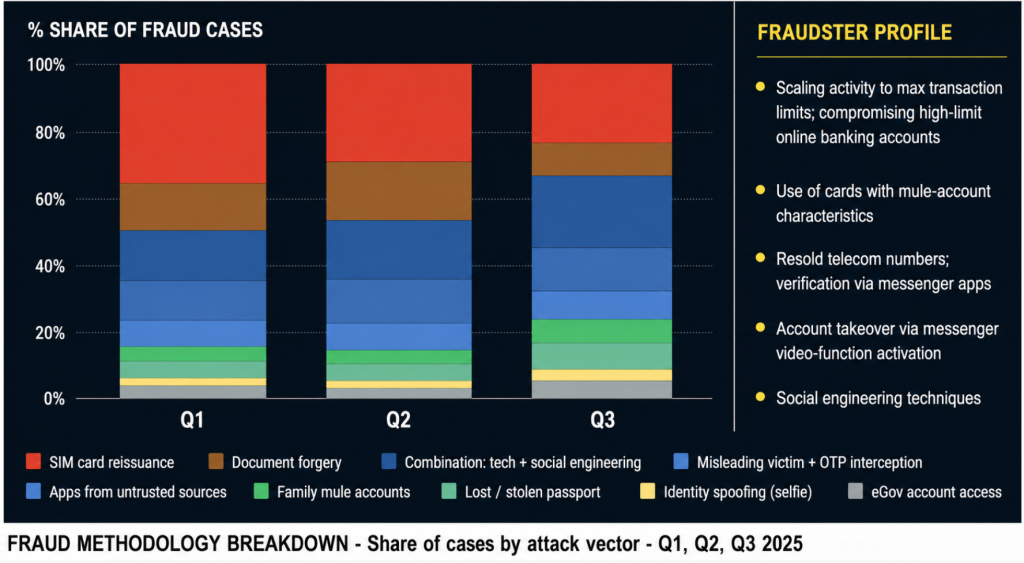
During one period, this approach helped reveal a surge in fraud connected to repeated SIM-card reissuance. The team understood which regulatory changes had enabled the scheme and was able to focus specifically on mitigating that attack vector. Fraud losses subsequently declined significantly.
Where AI Delivers Additional Value: Text Structuring and Change Detection
One of the most practical applications of AI is deceptively simple:
“Take a large flow of unstructured complaints and help us understand how themes are evolving over time. What are customers describing more frequently? What new patterns are emerging?”
The limitations are equally important to acknowledge.
AI did not produce the exact same conclusions as experienced investigators. It surfaced additional ideas, highlighted process vulnerabilities, and suggested alternative perspectives. But it did not classify information the way seasoned experts do.
Even so, the operational benefit was tangible. Teams gained a direction for transferring expert knowledge into structured frameworks so that future texts could gradually be classified in a manner closer to expert judgement. This matters because effective typology should not depend solely on the memory of individual specialists.
What ultimately matters is how the output is used.
AI can make mistakes. Only human experts can determine whether the proposed structure actually reflects operational reality. Yet even imperfect results save time: the system produces several analytical cuts, and experts can rapidly determine where deeper investigation is required.
Once customer complaints begin forming a coherent picture, teams can ask far more targeted questions:
- Which customer groups are most vulnerable?
- Where does the first interaction with the fraudster occur?
- Which customer actions become critical failure points?
- What do transaction sizes reveal about limit policies?
- Where are the process vulnerabilities that require redesign?
The value lies not in AI making decisions, but in accelerating the collection and initial packaging of investigative material.
Geomonitoring and Behavioural Anomalies
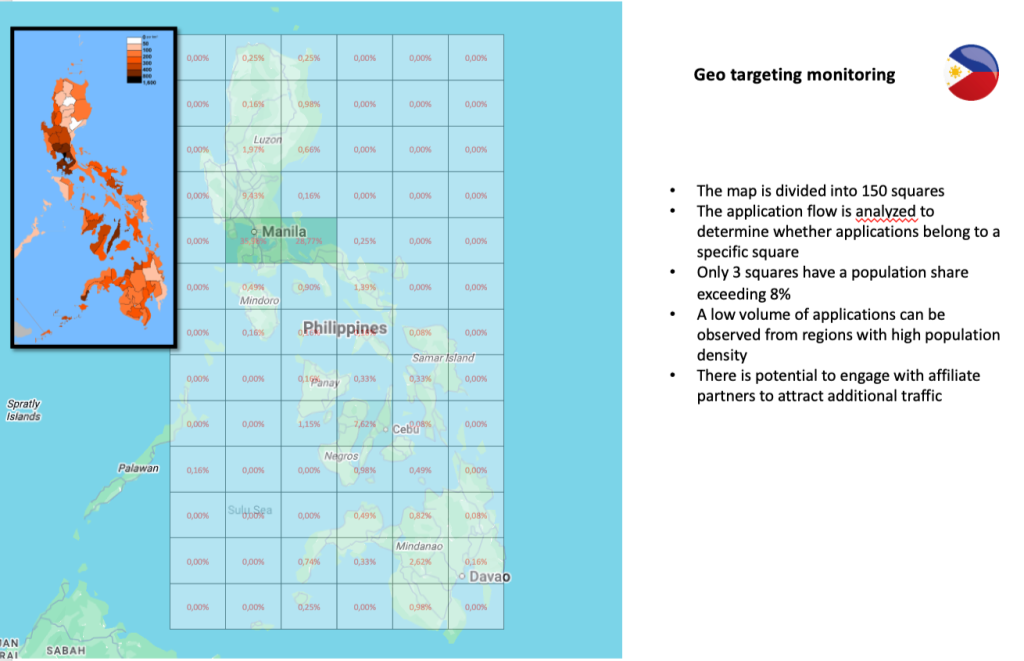
Another practical approach involves geomonitoring – dividing territories into operational zones and identifying abnormal activity clusters.
External conditions can rapidly change behavioural patterns. A sudden spike in applications, approvals, or complaints within a specific geographic segment may later correlate with elevated default rates or organised fraud activity.
This also helps organisations refine customer communication strategies and assess the quality of partner traffic.
Don’t Put All Your Eggs in One Basket
Relying on a single “ultra-powerful anti-fraud platform” often creates excessive costs without proportionate efficiency gains.
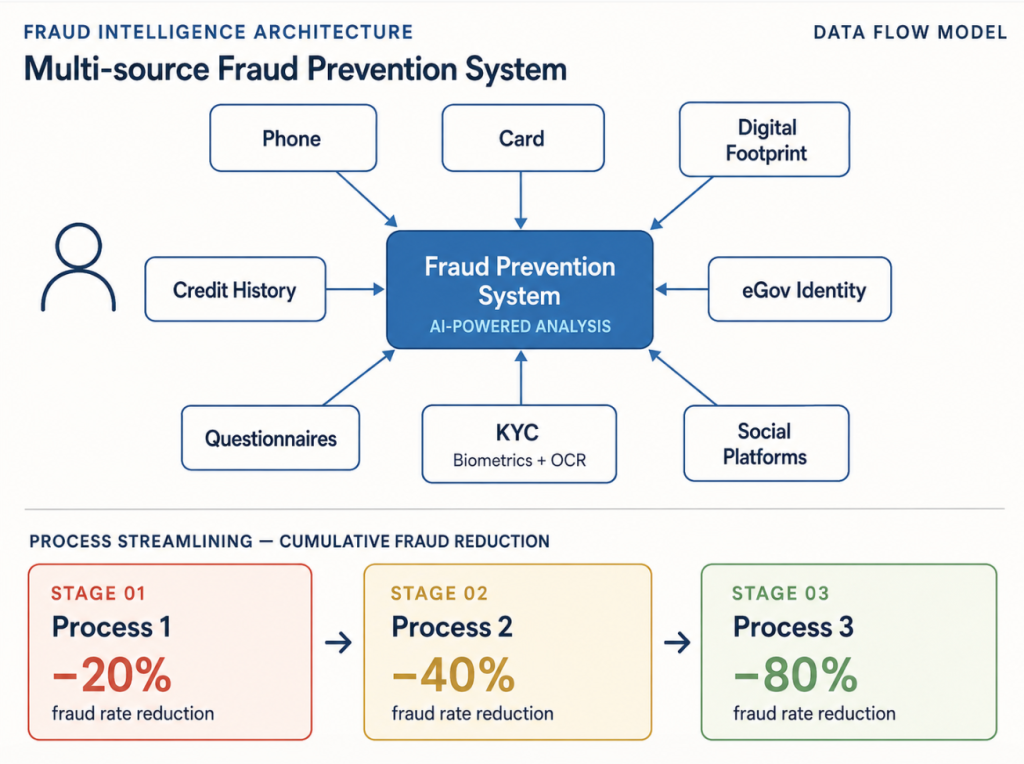
An alternative approach is distributing protection mechanisms across the process itself.
In practice, this means introducing different controls at different stages: one layer before application review, another before document submission, another before photo verification, and additional checks later in the funnel.
As fraud exposure gradually decreases throughout the process, the need for one massive centralised detection engine declines dramatically.
This reflects a broader operational principle: anti-fraud is not merely a technology stack – it is process architecture.
The Challenges Anti-Fraud Teams Are Facing Today
Fraudsters Are Moving into Messaging Platforms
Phone-based fraud is increasingly shifting toward messaging applications, where organisations have fewer control points and fraudsters gain more room for manipulation. For many teams, there is still no simple answer to this challenge.
“Smart Bots” Are Scaling Fraud Faster and Cheaper
Fraud operations themselves are becoming increasingly automated. Bots can imitate customer behaviour, execute repetitive attacks at scale, and reduce operational costs for fraud networks.
This fundamentally changes the structure of anti-fraud work: attacks become continuous, iterative, and industrialised.
Deepfakes and Biometric Attacks
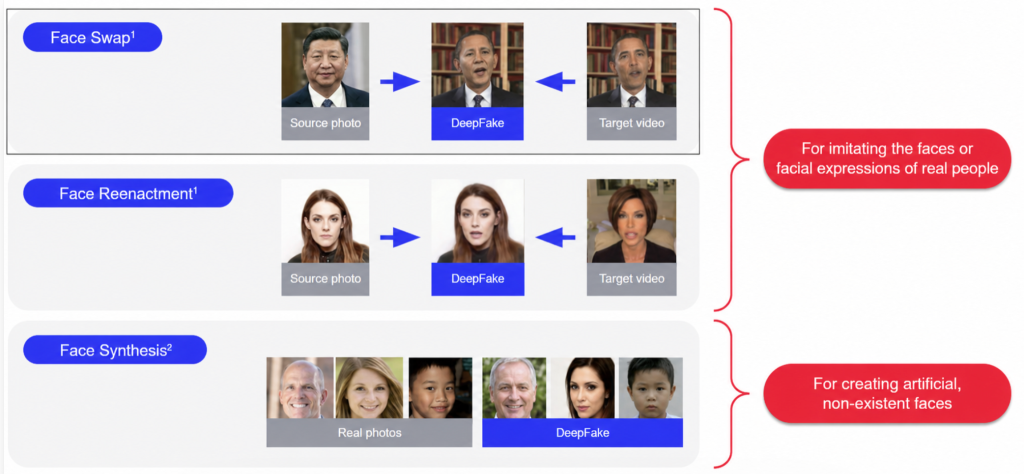
The critical distinction here is between facial recognition models themselves and attacks targeting the presentation layer.
The issue is often not whether a model can recognise a face, but whether fraudsters can manipulate the presentation process convincingly enough to bypass verification.
As a result, anomaly detection around presentation behaviour becomes increasingly important.
Third-Party Vulnerabilities
Even organisations with strong internal controls remain exposed through vendors and external partners.
If a contractor suddenly changes its behavioural patterns – data formats, interaction models, file structures, or operational rhythms – those deviations may indicate compromise or emerging fraud risks.
This is precisely where the idea of a trained AI assistant capable of continuously monitoring anomalies becomes operationally valuable.
Important Practical Observations
Digital Behavioural Anomalies
Digital fingerprinting is often treated as “attention to small details”: how a customer interacts with a device, what behavioural patterns emerge, and which abnormal clusters begin appearing.
AI becomes useful here simply by surfacing new anomalies regularly. Human experts then interpret those signals and convert them into operational decisions.
Online Banking Behaviour as a Signal Source
Customer behaviour inside digital banking environments remains an underestimated signal source.
Login times, geolocation shifts, unusual device types, or sudden changes in behavioural patterns can all indicate compromise before a fraudulent transaction even occurs.
If a customer has always used Apple devices and suddenly logs in from an unfamiliar low-cost Android device thousands of kilometres away, that deviation matters. Proactive verification in such cases not only reduces fraud exposure but can also strengthen customer trust.
Manipulation of Payment Details During Application Processes
Another recurring scenario involves repeated changes to payout details during the application flow.
Fraudsters may initially provide fake payment data to pass early controls and later replace it with high-value mule accounts before final disbursement. Without monitoring changes to payment credentials throughout the process, organisations unintentionally create fraud opportunities.
Prevention Through Organised Group Detection
Effective prevention is not limited to declining individual suspicious applications.
One important operational lesson came from jurisdictions where authorities focused heavily on identifying organised fraud groups, mapping relationships, and pursuing high-profile enforcement cases.
The result was not merely more blocked attempts, but deteriorating economics for fraud networks themselves. Once fraud becomes less profitable, attack volumes decline.
This is an important principle: prevention reduces the total attack flow – not just isolated incidents.
AI Will Not Replace Humans – And That Matters
The probability of fully replacing anti-fraud professionals with AI is viewed as effectively zero.
First, there is model risk. Once organisations become accustomed to AI-generated outputs, managers may gradually overtrust the system while human expertise deteriorates.
Second, AI can produce highly confident answers even when no valid answer exists. It may invent rules, standards, or patterns that have no grounding in reality.
Without expert validation, this becomes dangerous.
The conclusion is straightforward: AI is an intellectual assistant for operational routine – not a source of truth.
Practical Takeaways for Anti-Fraud Teams
- Clearly separate ML/Big Data tasks from anomaly structuring and text analysis tasks.
- Use AI where it saves time without removing human control: descriptive statistics, complaint structuring, thematic change detection, anomaly highlighting.
- Preserve institutional knowledge through typologies, feature libraries, and accumulated behavioural vectors.
- Treat anti-fraud as a process architecture rather than a standalone technology layer.
- Keep humans firmly inside the decision-making loop: AI helps identify and structure signals, but experts remain responsible for interpretation and judgement.
Conclusion
The main practical value of AI in credit anti-fraud lies in accelerating the cycle from signal detection to rule creation and process adjustment.
Where teams face overwhelming volumes of text, repetitive analysis, and operational overload, AI becomes a highly effective working tool. But only under one condition: expertise remains central, meaning is continuously validated, and anti-fraud is built as an integrated operational system rather than a collection of disconnected technologies.

Currency Volatility and Bank Margins: How to Measure the Effect and Calibrate FTP
Exchange-rate volatility in Turkey after 2018 has become not an episodic shock but a persistent factor linked to the dynamics of banking margins. Once this relationship is measured and the influence of local and global factors is separated, it becomes a practical tool. The estimated sensitivity of margins to volatility can then be used as a reference parameter for Funds Transfer Pricing (FTP).

Reading CIS Economies in an Era of Uncertainty
How can we assess the resilience of CIS economies against a backdrop of global uncertainty without trying to predict the unpredictable? The practical approach is to break external pressure down into three channels—oil, gold, and secondary effects via trading partners—and identify where it is most likely to surface: in the budget, the current account, inflation, or the exchange rate. Using Armenia, Azerbaijan, Kazakhstan, and Uzbekistan as examples, this framework highlights which domestic fault lines amplify or cushion external shocks—and which indicators provide early warning signals of a turning point.